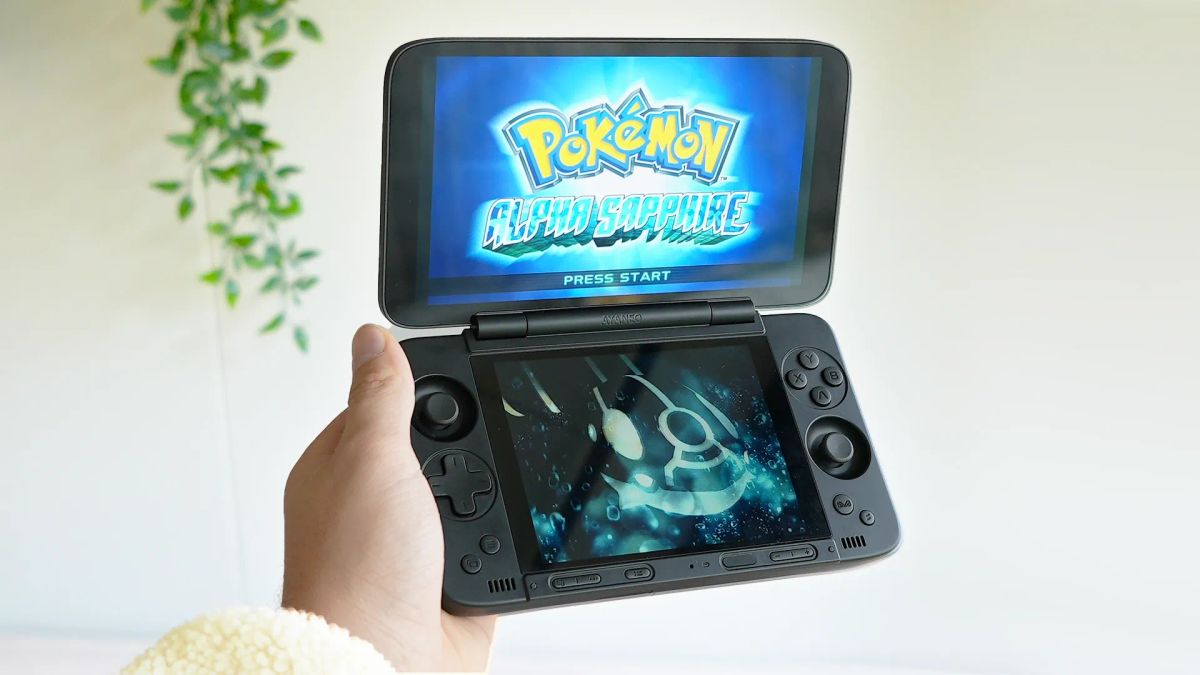
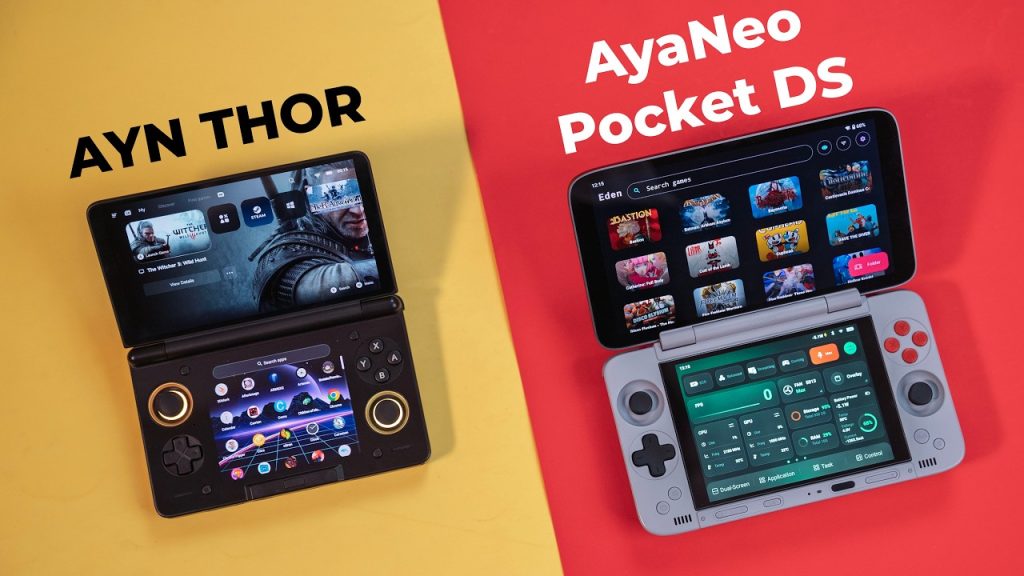
In the handheld gaming market, users are faced with choices that are both incredibly exciting and challenging. On one side stands the AYN Thor—an icon of ultimate hardware prowess; on the other is the Ayaneo Pocket DS—a device steeped in nostalgia with its unique dual-screen design. However, when diving deep into real-world performance, thermal management, and long-term value, the AYN Thor proves itself to be an unbeatable ‘beast’ in its class.
Data Path Architecture and GPU Throughput
This is the fundamental differentiator regarding frame pacing and overall fluidity.
- AYN Thor (Single-Path Efficiency): By focusing on a single display, the Adreno GPU within the Snapdragon 8 Elite chipset can dedicate 100% of its memory bandwidth and processing cycles to a single output stream. This is critical for modern graphics APIs like Vulkan. When running high-end Switch emulation—which requires constant shader compilation—the Thor doesn’t waste resources maintaining a “frame buffer” for a secondary screen, virtually eliminating micro-stuttering.
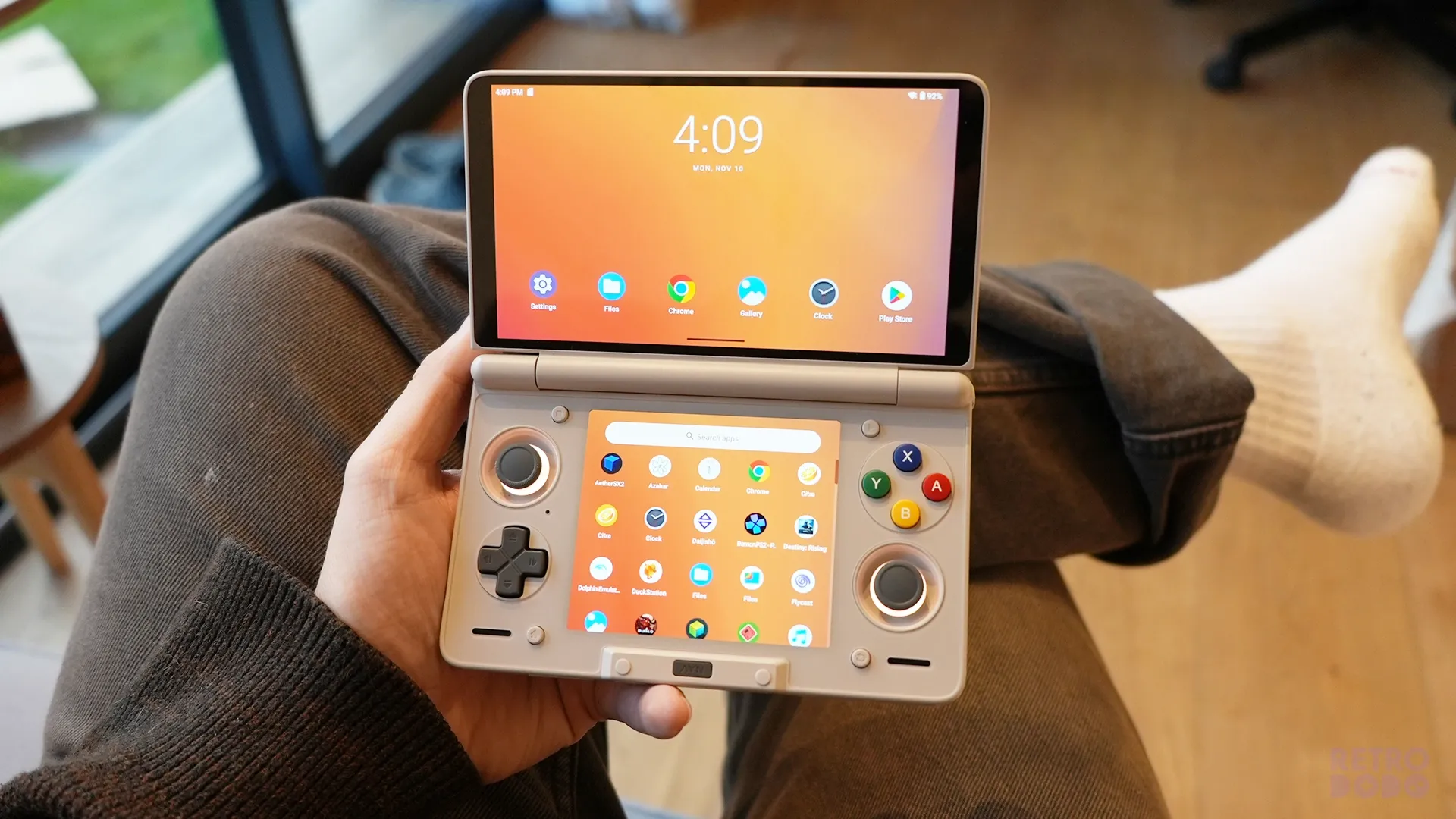
- Ayaneo Pocket DS (Dual-Display Overhead): Operating two screens simultaneously means the OS must manage two separate display pipelines. Even if the secondary screen only displays a static map or menu, the GPU still consumes cycles to maintain its resolution and refresh rate. In hardcore tasks like Windows-on-ARM emulation, this overhead represents the gap between a game being “playable” and being “flawless.”
Thermal Management and the Law of Sustained Performance
The real-world power of a handheld is not measured by its peak clock speed, but by its sustained clock speed.
- The Vapor Chamber (VC) Advantage of the Thor: The Thor’s VC cooling operates on the principle of liquid phase transition. Its surface area is significantly larger than the traditional heat pipe systems found in the Pocket DS. This allows the Thor to operate at a higher TDP (Thermal Design Power)—roughly 18-20W—without overheating the exterior shell.
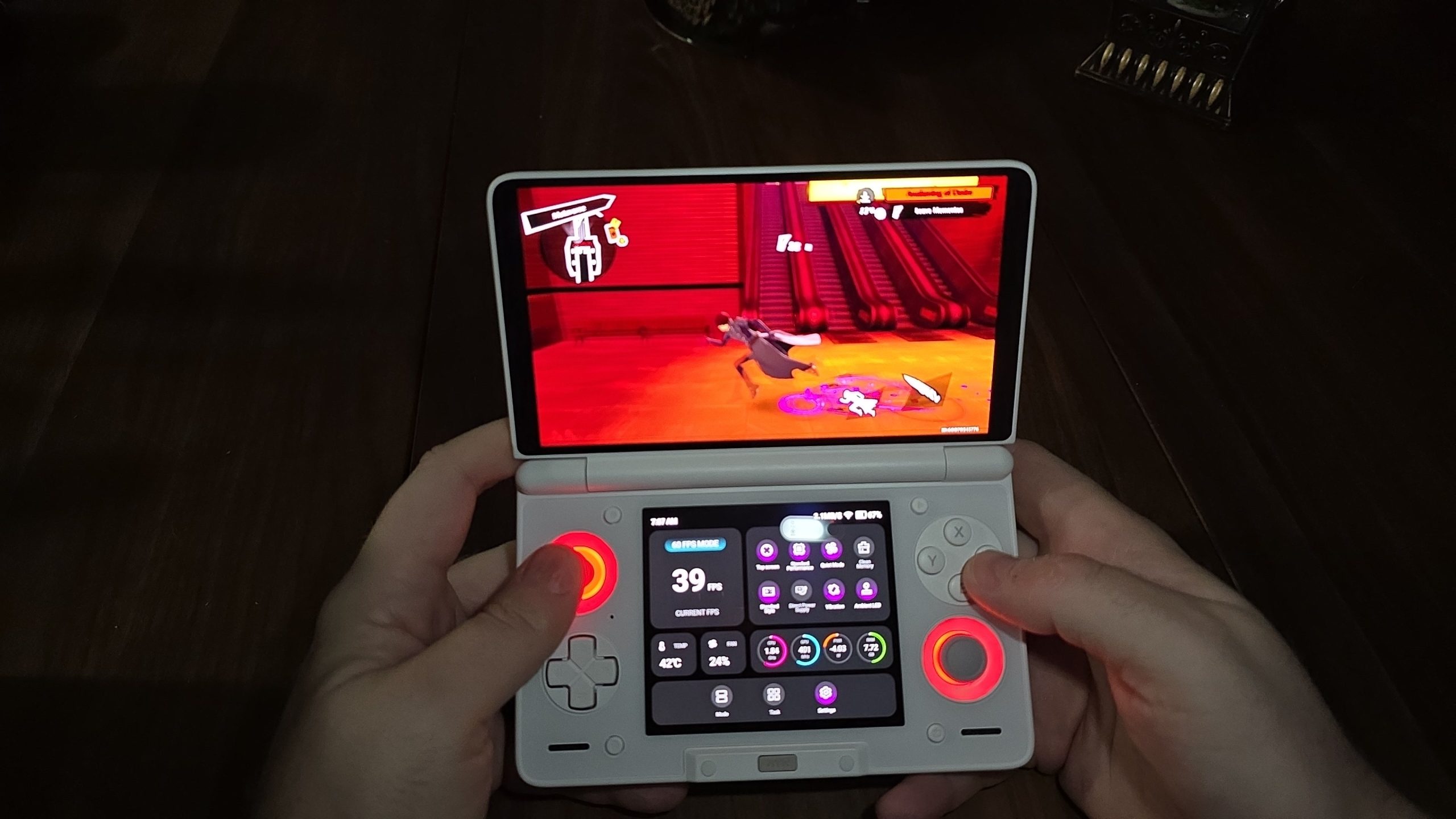
- The “Confined Space” Weakness of the Pocket DS: Because the dual-screen structure occupies most of the internal real estate, airflow is restricted. Once temperatures hit a certain threshold, the system automatically throttles the CPU/GPU to protect components. Consequently, after 30 minutes of playing demanding titles like Wuthering Waves, the Pocket DS may see a 15-20% performance drop, whereas the Thor maintains 98-99% of its initial performance.
Battery Tech and Performance-per-Watt Efficiency
- AMOLED vs. LCD: The Thor’s AMOLED screen is more than just beautiful; it is a smart power-saving tool. In games with dark themes or true black areas, pixels on the Thor turn off completely. Conversely, the Pocket DS utilizes two screens (typically LCD), which require a constant backlight across the entire surface. This creates a “dual power tax” that drains the battery rapidly.
- 10,000mAh Capacity: This is a massive figure for an Android device. Combined with AYN OS optimizations, the Thor offers the highest energy density per hour of gameplay in its class. You can complete an entire long chapter of a game without ever glancing at the battery percentage.
Ergonomics and Input Latency
- Hall Effect Precision: While both devices may utilize this technology, AYN’s calibration tends to favor instantaneous response. The spacing of the buttons and analog sticks on the Thor is calculated for complex multi-button inputs (common in FPS or Action RPGs).
- Ergonomic Balance: The Pocket DS, with its clamshell/dual-tier design, creates a shifting center of gravity that can cause wrist fatigue over time. The Thor, with its unibody design, feels like a traditional console controller, distributing weight evenly across the palms for a more “planted” feel.
Technical Comparison Summary
| Criteria | AYN Thor | Ayaneo Pocket DS |
| GPU Bandwidth | Absolute Focus (Optimized for heavy emulation) | Divided (Optimized for DS/3DS layouts) |
| FPS Stability | Very High (Maintained by VC Cooling) | Moderate (Prone to thermal throttling) |
| Color Depth | Infinite Contrast (OLED) | Limited Contrast (LCD/IPS) |
| Physical Reliability | Highly Durable (Unibody) | Moderate (Complex ribbon cable mechanism) |
| Power Efficiency | High (AMOLED + Single Display) | Low (Backlight + Dual Display) |
Conclusion: Why the AYN Thor Emerges as the Winner?
While the Ayaneo Pocket DS is a fantastic device for those looking to relive memories of Nintendo’s dual-screen systems, the AYN Thor stands in a league of its own when evaluated as a professional and versatile gaming instrument.
Key reasons to choose the AYN Thor over the Pocket DS:
- Superior Real-World Performance: A next-gen chipset paired with massive RAM effortlessly handles everything from native Android titles to demanding PC games.
- 144Hz AMOLED Display: Next-level visual quality, featuring unrivaled color depth and fluid motion.
- Vapor Chamber Cooling: Keeps the device thermally stable, ensuring zero FPS drops during intensive sessions.
- Massive 10,000mAh Battery: Provides all-day gaming without the anxiety of running out of power.
- High Durability: The unibody design and Hall Effect components ensure the device remains a reliable companion for years to come.
The AYN Thor is more than just a gaming handheld; it is a true “war machine,” ready to crush every performance barrier to deliver the ultimate player experience. If you demand stability, power, and endurance, the Thor is the definitive answer.